Victoria Falls Facts | All Facts About Victoria Falls
Victoria falls Facts, Victoria Falls is regarded as one of the ten greatest wonders of the world and a UNESCO World Heritage Site, functions as a natural demarcation between the upper and lower segments of the Zambezi River. The Zambezi River delineates the boundary between Zambia and Zimbabwe, however the river itself exists in a state of “no man’s land.” The falls were initially found by the European adventurer and missionary David Livingstone in 1855. Livingstone designated the falls as Victoria in honor of the reigning Queen of England at that time. Explore the 4-Day Enchanting Safari in Lower Zambezi
African tribes inhabited the region for generations prior to Livingstone’s arrival. Archaeologists have unearthed fossils and implements suggesting that early humans, including Homo habilis, inhabited the vicinity of the falls approximately 3 million years ago. The Batoka ultimately supplanted these Stone Age inhabitants, subsequently joined by the Matebele and Makolo tribesmen. Their progeny continue to reside in the region presently. The indigenous tribes harbored a profound terror of the falls, and few ventured to approach them near. Among the native guards escorting David Livingstone, only two shown the courage to accompany him close the falls. This apprehension led to the waterfalls being largely unexamined by the indigenous tribes. It was only until a railway line was established near the falls that they gained appeal among the local population.
When is the Best Time to Visit Victoria Falls
January signifies the peak of the rainy season at Victoria Falls. The Zambezi River commences its ascent, as the falls begin to accumulate strength and magnitude. Anticipate elevated temperatures, high humidity, and frequent afternoon rain. The adjacent rainforest is verdant, rendering this an opportune moment for shooting. Nevertheless, mist from the falls may obstruct views from proximate sites. Adventure activities like as white-water rafting and Devil’s Pool are typically suspended due to safety considerations; however, sightseeing flights provide exceptional views of the swollen river.
February perpetuates the wet season with recurrent precipitation and progressively intense water flow. The cascades intensify in volume and force, while the adjacent landscapes are vivid and dynamic. Although activities within the gorge’s perimeter are restricted, this month is ideal for aerial excursions, cultural explorations, and tourists who favor cooler climates and reduced crowds. Anticipate midday precipitation and mild, cloudy conditions.
March approaches the waterfalls’ peak water level. This is when the magnitude and roar of Victoria Falls are at their most striking. The mist from the waterfall can be severe, particularly on the Zimbabwean side, necessitating the use of raincoats and waterproof cameras. Although rafting is currently halted, this month offers an exceptional opportunity to witness the unadulterated force of nature, particularly from an aerial perspective via microlight or helicopter flight.
In April, the Zambezi River attains its annual zenith, and Victoria Falls transforms into a cascade of thundering water across the full breadth of the gorge. Although the volume is awe-inspiring, vision from specific vantage points is restricted due to substantial spray. Trails adjacent to the falls provide a striking, mist-laden jungle ambiance. Certain activities are limited, although the immense force of the falls at this period remains indelible.
May marks the beginning of the dry season. Rain diminishes significantly, and water levels begin their decline. As the fog disappears, vistas become more attainable and photographic conditions enhance. This is a best month for watching the falls at a stable yet more pronounced flow. Sunset cruises and several rafting segments are commencing their reopening. May signifies the reemergence of clearer sky and colder evenings.
June provides great circumstances for sightseeing and adventure. The dry season is fully established, and the mist surrounding the falls has diminished considerably, rendering this an excellent month for panoramic vistas and photography. Characterized by chilly mornings and arid, bright afternoons, this month is optimal for game drives in the adjacent Zambezi National Park. Rafting activities recommence in the river’s lower sections, and guided walking excursions near the falls are particularly pleasurable in the cool atmosphere.
July is regarded as one of the best months to visit Victoria Falls. Water levels are moderate—sufficiently low to provide good vistas of the falls while yet high enough to convey their force. The climate is temperate and arid, ideal for strolling, hiking, and extended safaris. July, characterized by a reduced mosquito population and moderate precipitation, is an ideal option for both novice travelers and families. Sunset cruises on the Zambezi River are particularly enchanting at this season.
August is preferred by people seeking to experience both the waterfalls and adventure activities. The climate is temperate and arid, wildlife observations are prevalent, and the fog has largely dissipated, facilitating unobstructed vistas. This marks the commencement of the Devil’s Pool season, during which water levels recede sufficiently to permit swimming at the precipice of the falls under supervised supervision. The current period is ideal for rafting, safaris, and engaging in outdoor activities without the hindrance of excessive heat or precipitation.
September is an optimal month for visiting Victoria Falls. Water levels are diminished, resulting in reduced thunderousness of the falls while enhancing their visibility. This is the optimal season for Devil’s Pool, comprehensive rafting excursions, and guided treks down the gorge. Wildlife congregates near waterholes, rendering game drives exceptionally fruitful. Anticipate warm to hot days with minimal precipitation and optimal lighting conditions for sunrise and sunset photography.
October is the warmest and driest month in Victoria Falls, with daytime temperatures frequently surpassing 35°C (95°F). The Zambezi River is at its nadir, providing optimal conditions for exhilarating activities like as white-water rafting, bungee jumping, and Devil’s Pool. Although the waterfalls are less voluminous, the revealed rock formations and striking cliff edges provide a fresh viewpoint. Wildlife observations are at their zenith, particularly in proximity to aquatic habitats within the adjacent parks.
November signifies the shift from the arid to the rainy season. The initial rains commence, causing the Zambezi to ascend once more. The terrain rapidly becomes verdant, and temperatures persist in their warmth. While certain adventurous activities may continue at the beginning of the month, Devil’s Pool is likely to close later owing to increasing water levels. November is regarded as a shoulder season, characterized by reduced crowds and diminished prices, rendering it an astute option for adaptable visitors.
By December, the rainy season had fully resumed, delivering intense afternoon downpours and a verdant, thriving landscape surrounding the falls. Water levels are rising, but mist has not yet attained maximum density, resulting in satisfactory visibility at the beginning of the month. This is a less busy travel season, providing increased lodge availability and reduced costs. Cultural excursions, aerial sightseeing, and leisurely sunset cruises continue to be favored despite the inclement weather.
Requirements to Visit Victoria Falls
Visa Requirements for Zimbabwe and Zambia: To traverse the border between Zimbabwe and Zambia, it is necessary to present your passport to the immigration officials. Notify them of your intention to remain for one day or an extended duration. A double-entry visa is necessary for a day trip. Upon finalizing the paperwork, you will obtain an exit stamp on your visa and advance to the no man’s land. One may take a taxi upon crossing; however, the majority opt to traverse the 1.6-kilometer span across the bridge to reach the border post of the adjacent country. You must submit your passport once more and pay for a one-day visa, which is approximately $20. Consistently own modest denominations of currency.
Transportation to the falls: Private vans or taxis can be hired to commute from your lodging to the falls or principal towns. Hotels may facilitate automobile arrangements or offer rental contacts. Upon crossing borders, it is probable that you will need to procure an alternative vehicle upon entering the foreign country due to limits on vehicle crossings. Altering vehicles near the bridge might be impractical, particularly during the rainy season.
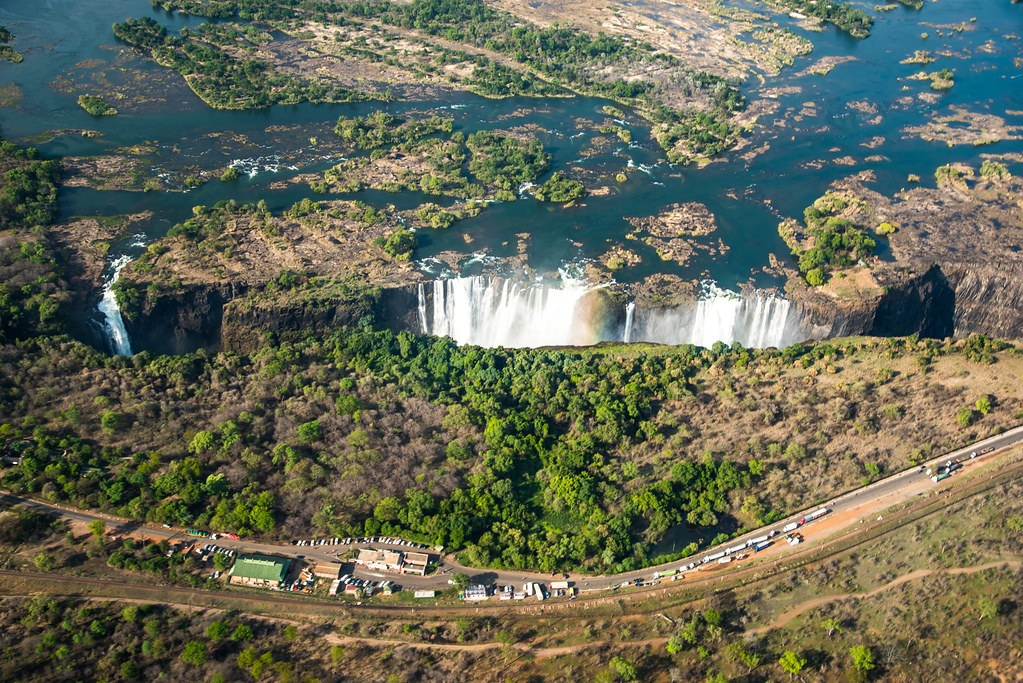
Currency: The Zimbabwean currency complicates transactions during visits. It is advisable to carry sufficient US dollars to circumvent the necessity of managing huge local denominations. Denominations of US dollar bills that are smaller in value are advantageous for gratuities and little transactions. Credit cards are generally accepted, though not universally. Victoria Falls comprises five distinct cascades: The Devil’s Cataract, Main Falls, Horseshoe Falls, Rainbow Falls, and Eastern Cataract Falls. Nineteen observation sites exist, of which fifteen are situated on the Zimbabwean side.
Anticipate getting wet: If you intend to observe the falls from both nations or visit during the rainy season (when water levels are elevated), prepare to become damp. The trail by the waterfalls is saturated with mist, creating the sensation of a torrential rain. Ensure you bring a raincoat and an umbrella. The waterfalls are situated within national parks: Anticipate the presence of wildlife, particularly on the Zimbabwean side. Elephants, baboons, mongooses, and various other creatures traverse the vicinity of the falls unrestrained. The absence of a border between tourists and park animals facilitates thrilling wildlife interactions. Prepare yourself. Vaccinations: A yellow fever vaccination certificate is required for entry into Zimbabwe and Zambia. Vaccination against Tetanus, Hepatitis A, and Hepatitis B is also advised. Entry into either country may be denied without a yellow fever vaccination card.
Things to do in Victoria Falls
Zambezi River cruise at Victoria Falls
Gorge swing safari on Victoria falls
Bridge swing on Victoria Falls
Victoria Falls guided tour in Zimbabwe
Helicopter ride safaris on Victoria falls
Microlight flight safari on Victoria Falls
Canoeing full day safari on River Zambezi, Zambia
Fishing safari on River Zambezi Zambia
White water rafting safari on River Zambezi Victoria falls
Game drive and rhino walk safari in Mosi-oa-Tunya National Park
Lion interaction and walking at Mukuni five safaris.
Bungee jumping safari on Victoria falls
Fascinating facts about Victoria Falls, accompanied by stories and legends.
A prevalent belief among the indigenous tribes asserts that the falls were formed by the deity Nyaminyami, who was incensed at the erection of a bridge across the Zambezi River. Nyaminyami is believed to inhabit the river’s depths and govern the water’s flow, with the construction of the bridge disturbing his realm. This myth illustrates the profound spiritual bond that the indigenous tribes maintain with the falls and the adjacent region.
The falls are associated with the notion of being a gateway to the spirit realm. Local beliefs believe that the mist emanating from the falls represents the spirits of ancestors transitioning to the afterlife. This conviction persists among numerous local tribes residing in the vicinity, underscoring the spiritual importance of Victoria Falls within their culture. The story of a young woman who sacrifices herself to the river to safeguard her hamlet from floods underscores the spiritual and protective qualities associated with the falls. Her soul is thought to continue safeguarding the falls and its visitors, imparting a sense of guardianship to this natural marvel.
Which indigenous communities inhabit nearby of Victoria Falls, and what is their relationship with the falls?
The Batoka are the most prominent indigenous group associated with Victoria Falls, having resided in the vicinity for millennia, with distinct and intriguing narratives and beliefs regarding the cascade. The indigenous Tonga people refer to the falls as Mosi-oa-Tunya, translating to “the smoke that thunders,” and they hold the belief that the spray and mist emanating from the falls possess spiritual significance, facilitating a connection to the spirit realm. Their forefathers reportedly cast offerings into the falls to placate the spirits. The Batoka people regard the falls as a sacred site inhabited by the spirits of their deceased ancestors, conducting rites and ceremonies there to pay homage to their ancestors and seek their guidance.
Indigenous peoples depended on the falls for sustenance, as the Zambezi River and the falls supplied them with fish, water, and arable land for agriculture. They utilized the river for transportation and engaged in trade with other tribes residing along its banks. Visitors to Victoria Falls can gain insights into the indigenous populace and their lifestyle by exploring the adjacent communities and engaging with the residents. This approach fosters a profound comprehension and admiration for this natural marvel and the communities that have coexisted with it for decades.
Recommended Safaris Packages to Visit and Explore Victoria Falls
1 Day Victoria falls tour
5 days Victoria Falls and Chobe safari
4 Days Zambia safari
6 Days best Zambia Elephant Safari
1 Day chobe National park tour
4 Days Zambia safari
Reasons to choose Visit Victoria Falls for your vacation to Victoria Falls
Reservation with Visit Victoria Falls To experience the intriguing aspects of Victoria Falls, it is essential to engage a reliable tour operator with comprehensive knowledge of the area; Visit Victoria Falls offers customized itineraries designed to accommodate individual interests and tastes. Their seasoned guides and personnel are committed to providing a smooth and unforgettable experience for tourists, managing all facets of the journey from lodging reservations to activity coordination. We encourage responsible and sustainable tourist practices, endorsing local communities and conservation initiatives in the region.